

AI-Powered Negotiation Insights with Live Data
Negotiations are evolving with AI-powered tools that analyze live data to improve decision-making. These systems streamline deal processes by combining machine learning (ML), natural language processing (NLP), and real-time analytics to provide actionable recommendations.
Key Highlights:
- AI simplifies negotiation workflows: It analyzes emails, contracts, and messages to suggest strategies, draft responses, and flag risks.
- Live data integration: Combines internal records (CRM, contracts) with external market signals (pricing trends, competitor activity) for up-to-date recommendations.
- Behavioral insights: Tracks engagement signals (email opens, response times) to identify priorities and adjust tactics.
- Risk management: Detects problematic clauses, automates redlining, and ensures compliance with predefined thresholds.
- Unified communication: Platforms like Inbox Agents centralize email, chat, and social media interactions to avoid missed opportunities.
AI transforms fragmented communication into structured insights, helping teams close deals faster, minimize risks, and achieve better outcomes. While automation handles data-heavy tasks, human negotiators make the final decisions, supported by real-time intelligence.
AI in Negotiation: The Game-Changer You Can’t Ignore
Core Components of AI-Powered Negotiation Systems
AI-powered negotiation systems are built on a layered structure that transforms scattered data into actionable insights. These systems rely on three key components: advanced AI technologies, a variety of data sources, and real-time pipelines. Together, they ensure negotiators receive timely, relevant recommendations that directly inform their decisions.
Key AI Technologies in Negotiation
Modern negotiation systems are powered by three main technologies: natural language processing (NLP), machine learning (ML), and real-time analytics. Each plays a critical role in turning raw communication into meaningful guidance.
NLP acts as the system's language expert, analyzing emails, chat messages, and contract documents to extract key details, identify issues, and assess tone or sentiment. For example, if a supplier emails a counteroffer, NLP can isolate terms like liability caps, payment schedules, and delivery dates, comparing them against your organization's playbook. If the supplier suggests a liability cap of 3× fees when your policy sets the limit at 2×, the system flags the discrepancy instantly.
NLP also streamlines contract review with automated redlining. Using a traffic-light color scheme - green for standard terms, amber for minor deviations, and red for high-risk clauses - it highlights key areas for legal teams to review. This saves time and ensures consistency. When responding to a counteroffer, the AI can even draft alternative clauses in plain English. For instance, it might suggest: "Limit liability to 2× annual fees, in line with our standard terms for contracts between $50,000 and $150,000."
ML models learn from past negotiations to predict outcomes and recommend strategies. By analyzing thousands of historical deals, these models uncover patterns that might go unnoticed. For example, ML might reveal that mid-market SaaS deals close faster with quarterly payment plans. Armed with this insight, the system can suggest payment structures tailored to specific deal sizes or customer segments, improving the chances of closing without unnecessary concessions.
ML also supports deal scoring and risk assessment by correlating factors like contract value, term length, industry, and past win rates. If a deal's score drops - perhaps due to delayed responses or unusual terms - the system triggers an alert, encouraging negotiators to adjust their approach. Some systems even use reinforcement learning to refine pricing strategies, testing different counteroffer scenarios to identify the most effective path within predefined limits.
Real-time analytics ensures the system adapts as conditions change. It monitors live negotiation activity, tracking engagement signals like email opens, proposal views, and response times. External data feeds, such as market indices or competitor news, are also integrated to keep recommendations current. For instance, if a counterparty reviews your pricing section multiple times without responding, the system may interpret this as price sensitivity and suggest offering a modest discount or alternative payment terms. This type of real-time insight helps negotiators act quickly and effectively.
The success of these technologies depends on robust data inputs, both internal and external.
Types of Data That Drive AI Insights
AI-powered negotiation systems rely on two main types of data: internal records and external signals. Together, they provide the context needed to deliver precise recommendations.
Internal data forms the backbone of personalized strategies. Key sources include CRM data (such as accounts, opportunities, and deal values in USD), historical contracts, pricing histories, and playbooks outlining acceptable terms and risk thresholds. For example, by standardizing fields like annual contract value (ACV) or product SKUs, organizations enable ML models to identify the most effective approaches for specific customer segments.
Contract repositories, whether part of a contract lifecycle management (CLM) system or a document management platform, are also essential. These repositories should store executed agreements with detailed metadata, like effective dates (formatted as MM/DD/YYYY), renewal terms, and negotiated exceptions. Such data allows the system to recommend standard language and flag deviations based on past outcomes.
Clear governance is critical for maintaining data accuracy. Role-based permissions, access controls, and retention policies ensure the AI uses reliable, up-to-date information. This not only supports compliance but also enhances the system's overall effectiveness.
External data provides the market context needed for informed decision-making. Sources include market indices, inflation rates, competitor pricing, and news or social media updates about customers or suppliers. For example, if commodity prices spike by 7%, the system can adjust pricing recommendations in real time. Similarly, if a competitor announces a price increase, the AI might advise holding firm on your current pricing.
External feeds connect to the system via APIs, enabling real-time updates. When thresholds are breached - such as a regulatory change impacting contract terms - the system immediately alerts negotiators or updates its recommendations. Platforms like Inbox Agents illustrate the power of centralized data flows by pulling messages from various channels (email, LinkedIn, WhatsApp, etc.) into one interface. This centralization improves identity resolution, ensuring negotiators see the full context of every interaction.
Real-Time Insight Flows in Negotiation Systems
The combination of advanced AI tools and diverse data sets creates a dynamic feedback loop during negotiations. These real-time insight flows operate continuously, following a cycle: ingest → analyze → score → recommend → log.
When a new message or contract markup arrives, the system ingests it immediately. NLP extracts changes - like revised liability caps or updated payment terms - and compares them to internal playbooks and historical data. ML models then recalculate deal scores, price bands, and risk ratings on the fly. If terms exceed predefined thresholds, such as a liability cap going beyond 2× fees, the system triggers an alert.
Recommendations are delivered directly within the tools negotiators use, whether it's Microsoft Word, a CRM, or a unified negotiation platform. These recommendations might include alternative clauses, counteroffers, or tailored talking points. For example, if the AI detects a softened tone after a tense exchange, it could suggest conciliatory language to rebuild rapport while protecting key terms.
Every action and recommendation is logged with timestamps, ensuring a complete audit trail. This is especially important for regulated industries in the U.S., where compliance and traceability are critical.
Some systems take it a step further, enabling semi-autonomous actions. For instance, Statworx's negotiation agent can send calibrated counteroffers within predefined limits. If a counteroffer aligns with the playbook, the agent can autonomously close the deal while maintaining a detailed record of the transaction. This level of automation not only saves time but also ensures consistency across negotiations.
How Live Data Improves Negotiation Outcomes
Live data transforms guesswork into informed, real-time decision-making. By continuously pulling and analyzing information from multiple sources, negotiators can base their strategies on current realities instead of assumptions. This approach leads to faster deal cycles, better profit margins, and fewer costly errors. Let’s dive into how syncing internal records with live market data sharpens negotiation tactics.
Integrating Internal and External Data Sources
Real-time data integration allows negotiators to adapt strategies on the fly. By linking internal systems through APIs, deal data can be updated continuously. Combining historical records with live market feeds enables AI to refine its recommendations instantly, considering both internal constraints and external conditions. A centralized data system merges these sources, ensuring decisions reflect the most current market and operational realities.
To make this work, external data must be standardized. Feeds like commodity indices, inflation rates, benchmark interest rates, and competitive intelligence need to align using common units, timestamps, and product mappings. This ensures the AI can incorporate them into pricing models, risk alerts, and BATNA (best alternative to a negotiated agreement) estimates. For instance, if a commodity price surges overnight, the system can adjust pricing recommendations before the next counteroffer. Similarly, if a competitor announces a price hike, the AI might suggest holding firm on your current pricing instead of offering unnecessary discounts.
This integration also supports flexible walk-away points. Instead of locking in a minimum price months in advance, thresholds can adjust dynamically based on margins, market shifts, or deal-specific factors. When the market tilts in your favor, the system can propose time-sensitive offers to capitalize on the opportunity. On the flip side, during tighter conditions, it might flag deals that no longer meet profitability goals and suggest alternatives like shorter terms or value-added services instead of deeper discounts.
Behavioral and Engagement Signals in Negotiations
Negotiations aren’t just about numbers - they’re also about understanding behavior. Live behavioral signals, such as email open rates, response times, and engagement levels with proposals, can reveal what matters most to the other party and where resistance might be brewing.
For example, if a decision-maker keeps revisiting the pricing section of a proposal but ignores the legal terms, the AI might recommend offering a small discount in exchange for a longer contract, rather than making concessions on legal clauses that aren’t a priority. This targeted approach saves time and preserves value by focusing on what truly influences the deal.
Patterns in response timing and stakeholder activity also provide clues about deal health. Delayed responses or negative replies may signal internal pushback or competing offers. In such cases, the AI might suggest urgency-building tactics, escalating the deal to an executive sponsor, or adjusting the value proposition to address emerging concerns. Conversely, if multiple stakeholders start engaging with the proposal, it could indicate growing internal alignment, prompting the system to recommend accelerating the deal rather than offering further concessions.
Sentiment analysis across emails, chats, and call transcripts helps anticipate the counterparty’s receptiveness and flag potential conflicts early. For instance, if enthusiasm drops after introducing a particular clause, the AI might suggest alternative wording that protects your interests while aligning better with the counterparty’s preferences. Sentiment insights also guide decisions about tone, communication channels, and timing - for example, whether to send an email, schedule a call, or introduce creative trade options like bundling services instead of lowering prices.
Frequent objections to the same clause can signal a deeper misalignment. Instead of persisting with language that isn’t working, the AI can suggest alternative approaches based on what has succeeded in similar situations. By adapting to real-time engagement dynamics, this strategy replaces rigid playbooks with flexible, behavior-driven tactics. These insights feed into platforms like Inbox Agents, which streamline negotiation communications in real time.
Inbox Agents as a Unified Negotiation Hub
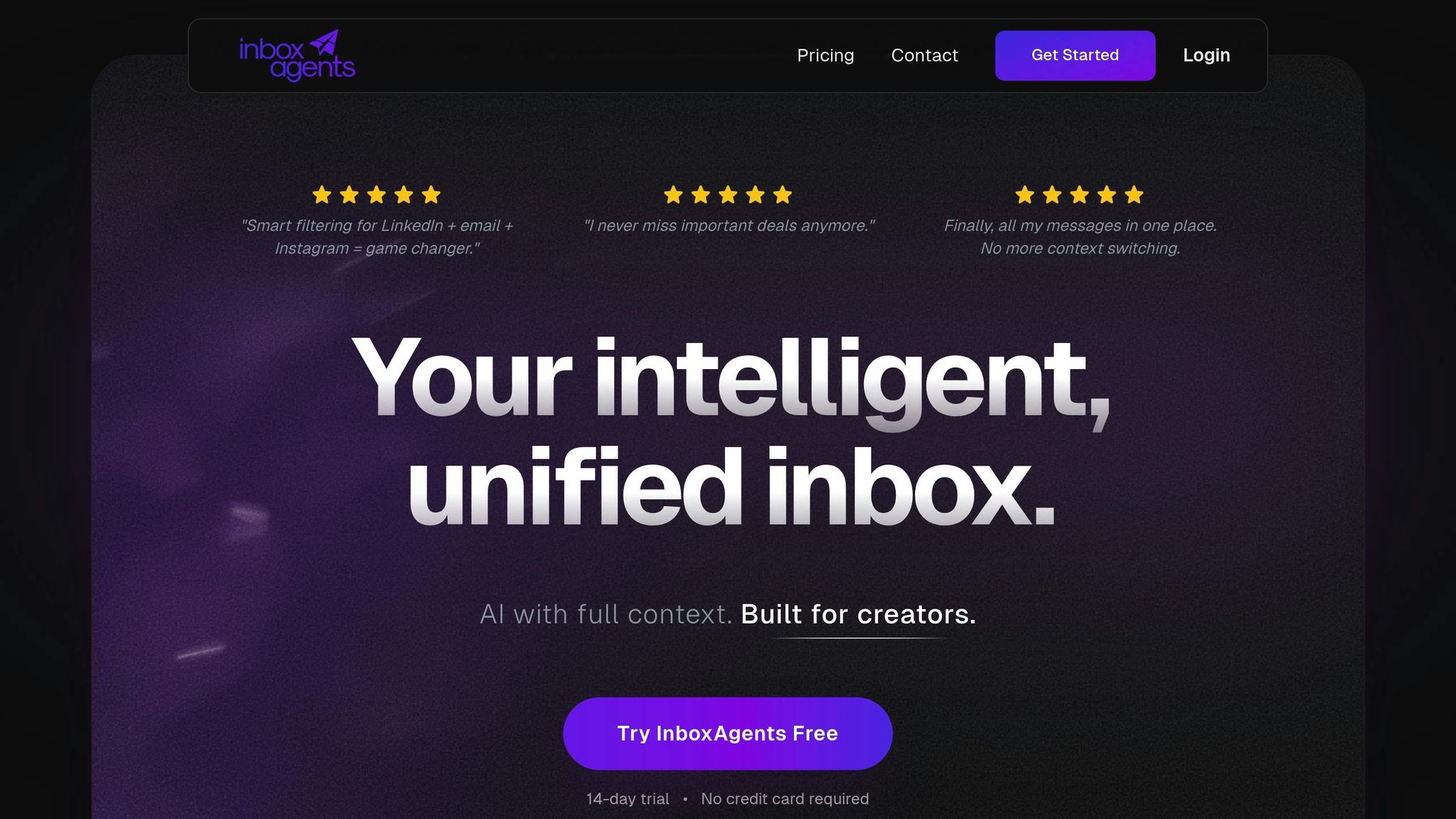
Negotiations often span multiple channels - emails, LinkedIn messages, WhatsApp chats, and more. When conversations are scattered across different apps, it’s easy to miss messages, duplicate commitments, or lose track of agreements.
Inbox Agents solves this problem by consolidating all communication channels into a single interface. Whether it’s email, LinkedIn, Discord, WhatsApp, or Messenger, the platform ensures every interaction is captured and made available to AI models. This unified view eliminates the need to switch between apps, reducing the risk of missed messages and inconsistent follow-ups.
Automated inbox summaries provide deal-specific updates by condensing lengthy threads into key takeaways, such as requests, blockers, and commitments. This feature is especially useful when juggling multiple negotiations or handing off a deal to a colleague. Instead of combing through endless messages, negotiators get a concise briefing that highlights what matters most.
The platform also offers smart replies tailored to current pricing rules, risk policies, and engagement patterns. For instance, if the AI detects a softened tone after a tense exchange, it might suggest a more conciliatory response to rebuild rapport while maintaining key terms. If a counterparty requests a meeting, the AI can handle scheduling negotiations - pending your approval - streamlining the process and saving time.
Inbox Agents even learns your communication style, tone, and relationship dynamics, ensuring that AI-generated responses feel authentic and context-appropriate. Whether you’re negotiating with a long-time partner or a new prospect, this personalization helps maintain consistency and professionalism.
sbb-itb-fd3217b
Key Features of AI-Powered Negotiation Systems
AI-powered negotiation tools have become increasingly sophisticated, leveraging live data and behavioral insights to refine deal-making strategies. These systems continuously update recommendations as negotiations evolve, ensuring decisions are both timely and well-informed.
Dynamic Deal Scoring and Real-Time Alerts
Gone are the days of static checklists. Dynamic deal scoring provides a live, constantly updated assessment of a deal's health. By analyzing factors like historical win/loss trends, current contract terms, margin calculations, and external market indicators (such as commodity prices or inflation rates), the system generates an up-to-the-minute score. Any change in terms - like payment deadlines or discount requests - triggers an instant recalculation.
Take this example: a counterparty extends payment terms from net-30 to net-60. The AI immediately evaluates the cash flow impact and adjusts the deal score accordingly. If the revised score falls below acceptable levels, the system flags the issue for attention.
Real-time alerts play a crucial role by notifying negotiators when key thresholds are breached. These alerts don’t just highlight problems - they also suggest actionable next steps, like escalating the issue, proposing alternative terms, or scheduling a follow-up. Platforms such as Inbox Agents showcase how integrated communication tools can streamline these processes, combining real-time scoring with actionable insights.
To prevent overwhelming users with notifications, effective systems prioritize alerts tied to critical thresholds. Less urgent updates are grouped into daily summaries, allowing negotiators to focus on high-stakes decisions. Visual aids, such as color-coded indicators (green, amber, red), make it easy to spot deviations from standard practices. These systems even recommend safer language based on past successes, ensuring quick and informed responses.
Scenario Simulation and Concession Planning
Scenario simulation allows negotiators to test different proposals without committing prematurely. By modeling combinations of factors like pricing, contract length, volume, payment terms, and risk allocation, the AI projects how each scenario might impact revenue, margins, and the likelihood of closing the deal. This "what-if" analysis helps teams explore creative options without undermining the overall value of the deal.
For instance, if a buyer demands a 15% discount, the system might simulate alternatives: offering a 10% discount in exchange for a longer contract, maintaining the current price while adding enhanced services, or providing a smaller discount in return for upfront payment. Each option is presented with clear financial outcomes in USD, estimated acceptance probabilities, and any associated risks or compliance flags.
Concession planning further refines this process by analyzing past deals to identify strategies that led to better outcomes, such as faster closures or higher customer retention. This approach often prioritizes non-monetary concessions over price cuts. For example, a playcard might suggest: "If the customer insists on net-60 payment terms, offer a 5% price increase or remove free implementation to maintain a 30% margin." These practical guidelines, integrated directly into messaging workflows, make it easier for negotiators to craft proposals efficiently. By feeding these insights into risk monitoring tools, every decision becomes both strategic and secure.
Behavior Prediction and Risk Monitoring
Behavior prediction uses historical data, response patterns, and sentiment analysis to anticipate how a counterparty might react to specific terms. For example, if a decision-maker frequently resists auto-renewal clauses but prefers longer initial terms, the AI might suggest offering a two-year contract with manual renewal. Similarly, if response times slow after introducing a particular clause, the system could flag it as a potential barrier and recommend alternative wording more aligned with the counterparty's preferences.
Risk monitoring, on the other hand, evaluates multiple dimensions of potential threats. These include:
- Commercial risks: Issues like margin erosion or unfavorable payment terms.
- Legal risks: Deviations from standard liability or indemnity clauses.
- Compliance risks: Missing regulatory language or other legal oversights.
- Reputational risks: Terms that contradict company values or policies.
The AI scans contract drafts for high-risk elements, routing them to legal or compliance teams for review when necessary. To streamline this process, companies can set auto-approval ranges for specific clauses and establish clear guidelines for handling exceptions.
Advanced systems also track where negotiations stall, calculating the cost of delays and identifying bottlenecks. This real-time feedback helps negotiators refine their strategies, ensuring smoother progress.
Platforms like Inbox Agents take these capabilities further by consolidating communication across multiple channels - email, LinkedIn, WhatsApp, Discord, and more - into one interface. By analyzing communication patterns, the AI learns the language, tone, and dynamics of relationships, enabling it to suggest personalized, context-aware responses. When paired with tools for deal scoring, scenario simulation, and risk monitoring, this unified approach ensures negotiators can close deals more effectively without losing track of key details or switching between apps.
Implementing AI-Powered Negotiation Workflows
To successfully integrate AI into negotiation workflows, start by documenting your current practices and translating them into clear, actionable rules. The aim is to incorporate intelligent guidance into the tools your team already relies on - email, messaging platforms, and contract systems - without overhauling their familiar processes or requiring entirely new software.
Designing Negotiation Playbooks for AI
A negotiation playbook serves as a blueprint, turning your business strategies into executable rules. This framework helps AI distinguish between acceptable compromises and deal-breaking conditions, enabling automated benchmarking, risk alerts, and counter-offer suggestions.
For example, define clear business objectives, acceptable ranges, and thresholds. Contracts under $100,000 might allow up to a 5% price increase, while higher-value agreements could require senior approval. Similarly, sales teams might cap discounts at 15% for deals below $100,000, escalating anything beyond that to a manager. These boundaries enable AI to flag proposals that fall outside your policies.
Scenario-based rules are another critical component. For instance, a rule might state: "If payment terms are extended from net-30 to net-60, increase the price by 5% or remove free implementation to maintain a 30% margin." This logic allows AI to generate counter-proposals automatically, reducing the need for human intervention in standard cases.
Risk tolerance thresholds should also be established. Define caps for liabilities, limits on indemnities, and mandatory data protection clauses. Clearly outline which deviations, such as changes to intellectual property clauses or exclusivity terms, require legal review. If AI detects unusual language in a contract - like modified termination rights - it can escalate the document to the appropriate team for assessment.
Additionally, include preferred and fallback language for key clauses. Maintain a library of proven terms for audit rights, confidentiality, and termination provisions. Some AI tools even use precedent engines to analyze past deals and recommend the most effective clause wording for similar scenarios.
Integrate historical deal data to enhance AI’s decision-making. Feeding past contracts - along with metadata like counterparty details, contract value, and time-to-close - into the system helps the AI identify trends. For instance, if contracts over $250,000 close faster with net-60 payment terms, the AI can highlight this during negotiations. A survey by DocuSign revealed that 49% of organizations face delays due to contracts stalled in legal review, emphasizing the importance of automation to reduce bottlenecks.
Once your playbook is ready, embed these rules into your communication channels to streamline the negotiation process.
Integrating AI into Messaging and Inbox Systems
Negotiations often extend beyond formal contracts into email threads, chat messages, and supplier portals. AI must seamlessly integrate into these channels, delivering insights and recommendations directly within the tools your team uses daily.
Unified inbox platforms offer a single interface for managing communications across email, chat, and other messaging apps. For example, platforms like Inbox Agents consolidate all interactions, creating a comprehensive view of each negotiation. This centralization ensures the AI has full context, improving its ability to provide relevant insights.
Within these platforms, AI-powered tools deliver real-time assistance. Features like automated inbox summaries can highlight high-priority conversations - Inbox Agents refers to this as the "Dollarbox" feature - so negotiators can focus on opportunities with the most potential. Smart replies are tailored based on the full conversation history, the counterparty’s tone, and your negotiation playbook. For instance, if a supplier requests a price increase, the AI might draft a counter-proposal suggesting alternative terms, such as a longer contract or higher volume commitment, to offset the cost.
AI can also handle routine tasks like scheduling and logistics, operating within predefined guidelines. Tools like Inbox Agents ensure human oversight by requiring final approval for any binding commitments. This balance between automation and manual review maintains control while reducing repetitive tasks.
Behavioral and engagement signals add another layer of intelligence. AI tracks factors like response times and sentiment, flagging potential barriers when a counterparty’s engagement slows after specific terms are introduced. Over time, the AI refines its understanding of your negotiation style, ensuring its suggestions align with your approach.
Integration with CRM, ERP, and CLM systems further enhances workflows. For example, pulling supplier history and pricing data from systems like SAP Ariba or Coupa gives AI the context needed for price negotiations. Sales teams using platforms like Salesforce can access deal scores, margin calculations, and recommendations directly within their email, reducing the need to switch between tools.
AI-driven negotiation tools have shown measurable benefits, such as a 30–40% reduction in negotiation cycle times and improved supplier responsiveness through instant, AI-generated interactions.
To ensure a smooth setup, choose platforms with APIs or native add-ins for tools like Microsoft Word and Outlook. These integrations allow negotiators to access clause suggestions and playbook guidance within familiar environments. Additionally, prioritize platforms that support SOC 2 certification, encryption, and role-based access controls to protect sensitive data, especially in regulated industries.
Human Oversight and Escalation Policies
While AI can streamline workflows, human oversight is essential for managing high-risk situations. AI can draft proposals, score deals, and suggest concessions, but final decisions - especially in complex or high-value negotiations - should remain with humans.
Set clear escalation thresholds to determine when human review is required. For example, deals exceeding $500,000, deviations from the playbook over 10%, or exclusivity requests might automatically trigger review by sales leadership, legal, or finance teams. Many platforms include fail-safe escalation mechanisms, ensuring that risky proposals are evaluated before moving forward.
Role-based approval workflows further clarify responsibilities. For instance, sales reps might handle minor concessions like small discounts or adjusted payment terms, while larger deviations require managerial or legal approval. This structure prevents unauthorized decisions while keeping negotiations efficient.
Use confirmation toggles to ensure AI cannot send binding commitments without explicit human sign-off. For example, Inbox Agents drafts responses and suggests actions but requires human approval for execution. This safeguard is critical for avoiding unintended legal or financial risks.
Finally, maintain detailed audit logs to track every AI suggestion, human override, and approved concession. These logs support regulatory compliance and provide valuable insights for refining your workflows. Many platforms emphasize comprehensive audit trails to ensure accountability and continuous improvement.
Conclusion
AI-powered negotiation systems are reshaping how deals are made in the U.S., shifting the process from instinct-driven decisions to strategies grounded in data. By combining internal resources like CRM records and past contracts with external inputs such as commodity prices or tariff updates, AI can suggest optimal walk-away points, discount ranges, and term structures. This approach not only boosts average deal size and margins but also increases the likelihood of closing deals successfully.
These systems also streamline negotiation processes. Tasks like contract review, redlining, and approvals are automated, cutting down cycle times and improving win rates. AI minimizes risks by flagging unusual clauses - like liability caps that deviate from standard norms - before agreements are finalized. The efficiency is further enhanced when communication across emails, chat apps, and social messages is consolidated into unified platforms like Inbox Agents, giving AI the context it needs to operate effectively.
While AI handles data analysis and drafts responses, humans remain at the helm, setting strategies and approving key decisions. For high-stakes deals, AI can evaluate risks, predict counteroffers, and provide senior negotiators with concise summaries, ensuring that critical decisions are always made by people, supported by actionable insights.
To harness these benefits, organizations can start by identifying negotiation bottlenecks - like lengthy legal reviews or pricing approvals - and pilot AI in targeted workflows such as vendor pricing or SaaS contract renewals. By integrating core data sources like CRMs and contract repositories with external market data feeds, companies can set clear boundaries for AI’s recommendations while keeping final approvals in human hands. Metrics like time-to-close, win rates, and flagged non-standard terms provide a clear picture of AI’s impact. Over time, these insights help refine playbooks that adapt to shifting market conditions and counterpart behaviors.
Leaders gain real-time visibility into pipeline value, risks, and expected outcomes through live dashboards. New team members also benefit, as embedded best practices and scenario guides help them get up to speed quickly. With real-time data and evolving playbooks complementing human expertise, negotiations become more strategic and effective. AI turns every interaction into a chance to achieve better results, equipping negotiators with the intelligence to make smarter, faster decisions.
FAQs
How does AI use live data to improve decision-making during negotiations?
AI-powered negotiation systems use live data to deliver real-time insights that can shape smarter decision-making. By examining elements such as market trends, pricing shifts, and historical patterns, these systems can pinpoint effective strategies and forecast potential outcomes with improved precision.
The use of live data ensures that insights remain current, allowing negotiators to adapt swiftly to changing circumstances and make well-informed choices. This blend of AI and real-time information helps businesses maintain a competitive edge and secure stronger results during negotiations.
How do machine learning and natural language processing enhance negotiation strategies?
Machine learning (ML) and natural language processing (NLP) are transforming the way negotiations are handled, offering real-time insights and practical recommendations to improve outcomes. ML works by analyzing massive amounts of live data, spotting patterns and trends that help predict results and suggest the best strategies. Meanwhile, NLP focuses on understanding and interpreting language, including tone, intent, and sentiment, to enhance communication.
Together, these technologies empower businesses to make smarter, data-backed decisions, tailor their responses to the situation, and tackle even the most complex negotiations with precision and confidence.
How can businesses make sure AI-driven insights support their negotiation strategies and policies?
To make sure AI-generated insights work hand-in-hand with your business's negotiation strategies and policies, the first step is to define clear rules for the AI to follow. This means outlining parameters that mirror your specific goals, desired outcomes, and risk tolerance. Regularly revisiting and adjusting these settings ensures the AI stays aligned with your unique needs.
Incorporating live data is another critical piece. By using real-time information, the AI can deliver contextually relevant recommendations during negotiations. This approach helps businesses make smarter, more informed decisions while staying true to their established policies. However, human oversight remains essential. Reviewing AI-generated suggestions and using them to complement your team’s expertise ensures consistency, builds trust, and keeps the process grounded in human judgment.