

AI Segmentation for High-Volume Messaging
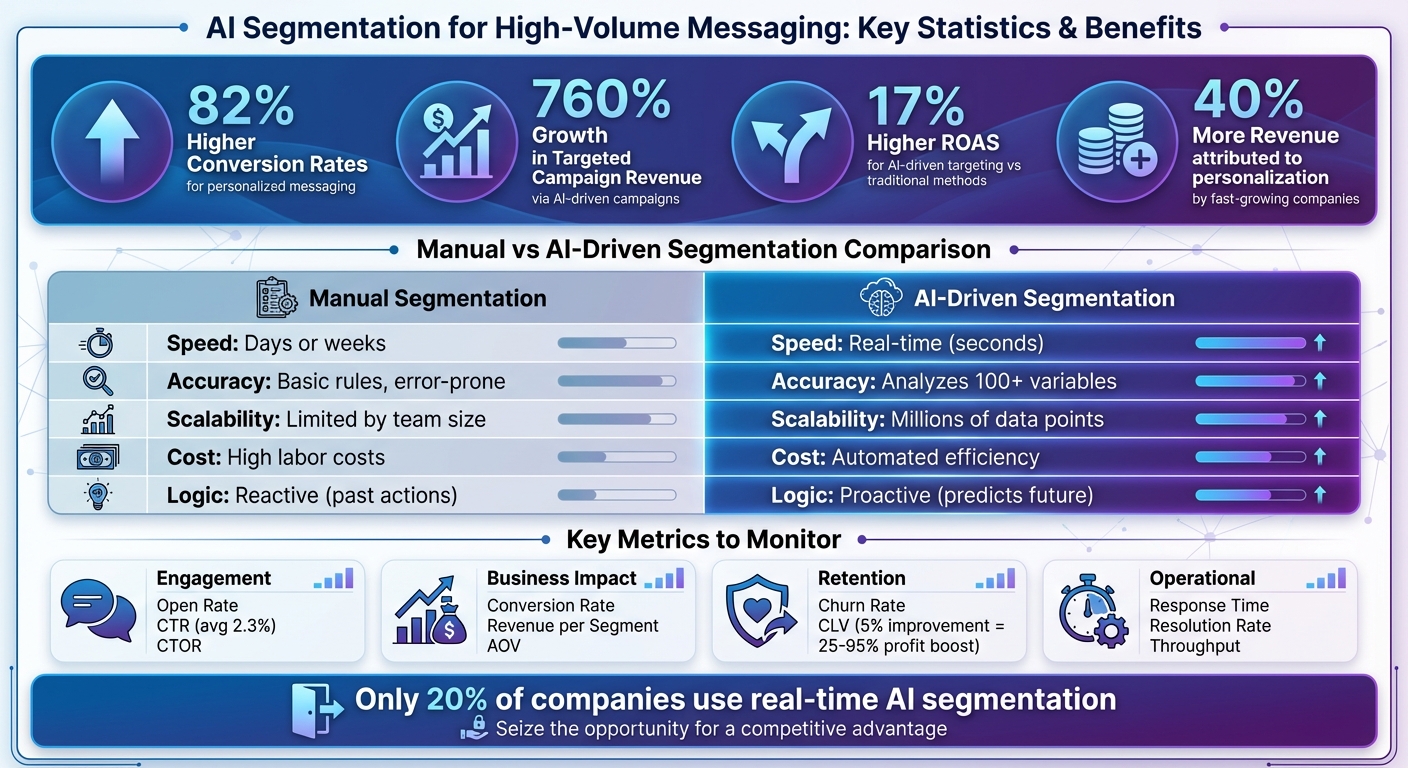
AI segmentation transforms high-volume messaging by using machine learning to group audiences based on real-time behaviors instead of static data. This approach helps businesses deliver relevant, timely, and personalized content across channels like email, SMS, and chat. Companies leveraging AI segmentation have reported:
- 82% higher conversion rates
- 760% growth in targeted campaign revenue
The technology dynamically updates audience segments within seconds of user interactions, ensuring messages align with current customer intent. Tools like Inbox Agents integrate messaging channels, analyze conversations, and automate workflows for tasks like lead qualification and personalized responses. This allows businesses to scale engagement efficiently while maintaining relevance.
Key takeaways:
- Use AI to predict future customer actions, such as purchase likelihood or churn risk.
- Focus on reducing disengagement, scaling personalization, and improving outreach efficiency.
- Metrics like open rates, click-through rates, and customer retention scores help measure the impact of segmentation.
- Clean, unified data is critical for AI accuracy. Consolidate CRM, website analytics, and other platforms into a single system.
- Machine learning techniques like predictive modeling and sentiment analysis uncover hidden behavioral patterns and micro-segments.
Inbox Agents simplifies AI segmentation by automating real-time updates, prioritizing messages, and generating tailored responses. This reduces manual effort while boosting campaign performance and customer satisfaction.
AI Segmentation Impact: Key Performance Metrics and Benefits Comparison
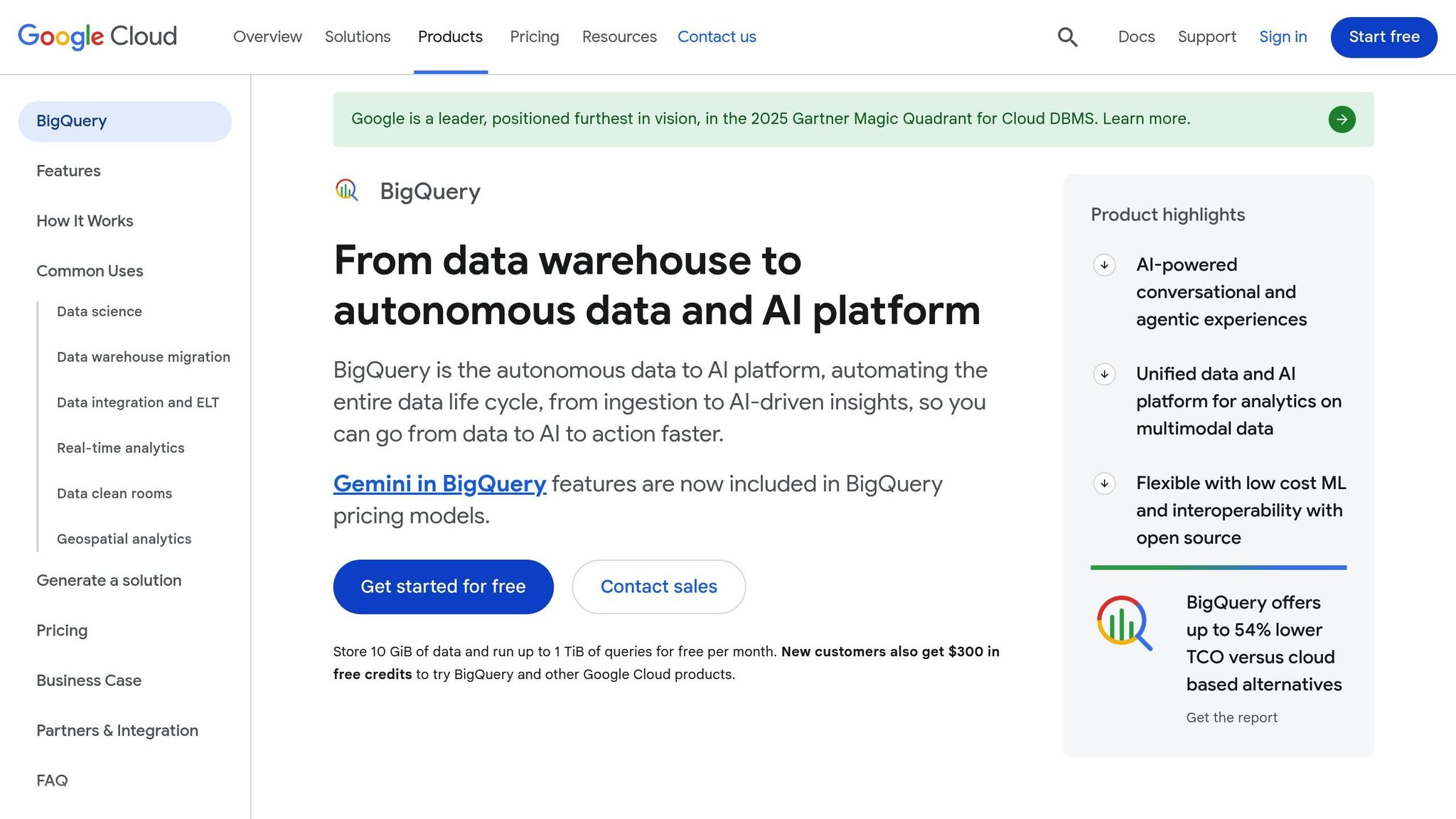
How to level up your customer segmentation strategy with BigQuery and Gemini in Vertex AI
Setting Goals for AI-Driven Segmentation
To make the most of AI-driven segmentation, start by setting clear and specific goals. These goals should guide your actions and help you accurately measure ROI. Without well-defined targets, it becomes difficult to evaluate the success of your investment in AI tools.
Your segmentation goals should tie directly to your business outcomes. For instance, if revenue growth is your focus, aim to identify and target high-value customer segments. If retaining customers is a priority, segment them based on engagement levels or churn risk. Instead of reacting to past behaviors, shift to predicting future actions like purchase likelihood or churn risk.
"Marketing used to be a volume game, where success was measured by how many people you could reach. Today, it's a relevance game." - Chaviva Gordon-Bennett, Monday.com
Interestingly, only 20% of companies have incorporated real-time AI segmentation into their strategies. This leaves a massive opportunity for those willing to embrace it.
Defining Objectives for Messaging Campaigns
When it comes to high-volume messaging, focus on three main objectives: reducing disengagement, scaling personalization, and improving outreach efficiency. Disengagement often occurs when messaging feels generic or irrelevant. AI segmentation addresses this by grouping audiences based on real-time behavior rather than static demographics, ensuring your content stays relevant.
For personalization, the goal is to deliver tailored content without increasing manual effort. AI achieves this by analyzing countless variables - like browsing habits, purchasing patterns, and even sentiment - to create detailed audience segments that manual methods might miss.
Efficiency is about sending the right message to the right audience. Instead of blasting the same message to everyone, AI helps identify specific needs: one group might need educational content, another could respond to a discount, and a third might be ready to buy. This targeted approach not only reduces wasted resources but also increases response rates across channels.
Identifying Metrics to Monitor Performance
Your metrics should align closely with your goals. For engagement, track open rates, click-through rates (CTR), and click-to-open rates (CTOR) to measure how well your segmented content resonates. For context, the average email CTR is about 2.3%, dropping to 1.8% for marketing emails. Any improvement above these benchmarks is a sign your segmentation is effective.
If retention is your focus, monitor customer retention rates, churn risk scores, and Customer Lifetime Value (CLV). Research shows that improving retention by just 5% can boost profits by 25% to 95%. Use dynamic segments to automatically flag users as "at-risk" after 90 days of inactivity, giving you a chance to re-engage them before they churn.
Operational metrics are equally important for high-volume messaging. Keep an eye on response time, resolution rate, and average handling time to ensure your segmentation efforts are improving efficiency. Test 3–5 pilot segments and compare their performance against control groups to measure AI's impact.
| Metric Category | Key Metrics | What It Measures |
|---|---|---|
| Engagement | Open Rate, CTR, CTOR | Content relevance and audience interest |
| Business Impact | Conversion Rate, Revenue per Segment, AOV | Financial success and campaign ROI |
| Retention | Churn Rate, CLV, Audience Retention | Long-term loyalty and segment health |
| Operational | Response Time, Resolution Rate, Throughput | Speed and effectiveness of messaging |
It’s important to review your segment definitions regularly - quarterly, or even monthly in fast-changing markets - to ensure they reflect evolving customer behaviors. Keep in mind that AI segmentation is only as effective as the data it relies on. To avoid the "Garbage In, Garbage Out" problem, unify your CRM, website analytics, and support tickets into a single, cohesive view.
Data Consolidation and Preparation for AI Segmentation
Clean and unified data is the foundation of effective AI segmentation, enabling businesses to gain dynamic audience insights across all channels. Without this, AI models struggle to identify patterns. If your customer data is scattered across CRM systems, website analytics, email platforms, and support databases, the solution lies in creating a single, unified source - often called a "Golden Profile." This central repository captures every interaction, purchase, and behavioral signal in one place, making it easier for AI to work effectively.
Accurate data is the key to personalization. Companies with faster growth attribute 40% more of their revenue to personalization compared to slower-growing peers. This level of tailored engagement depends entirely on having clean, unified data. Without it, AI operates with incomplete information, leading to subpar results.
Real-time updates are just as crucial. Customer behaviors constantly evolve based on context, mood, and device usage. If your data pipeline refreshes only once a day - or even less frequently - your segments will lag behind actual behaviors. For example, a customer messaging pilot program that used real-time integrated data saw a 70% revenue increase.
Inbox Agents addresses this challenge by consolidating messaging platforms into a single interface. This allows real-time updates across email, SMS, and in-app messages without requiring manual data stitching. By automating this process, the platform ensures AI segmentation reflects up-to-the-minute conversations, eliminating data silos. This gives AI the complete, updated picture it needs to identify valuable segments and deliver personalized messaging at scale. Next, let’s delve into how unifying multi-channel data drives these insights.
Unifying Multi-Channel Data
Unifying data means gathering signals from every system that interacts with your customers: CRM platforms like Salesforce or HubSpot, website analytics, mobile apps, e-commerce transactions, and support tickets. The aim is to create a centralized system - a data lake, warehouse, or Customer Data Platform (CDP) - that bridges these sources.
At the heart of this process is identity resolution. It connects known data, like email addresses and purchase histories, with unknown data, such as anonymous website visits, across online and offline channels. For example, if a customer browses on their phone, adds items to their cart on a desktop, and later calls support, identity resolution links all these actions to the same individual. Without this, AI risks fragmenting customer profiles.
The benefits are clear. Sanofi implemented a unified data platform and reduced the time needed to add new data sources by 93%. Similarly, MongoDB achieved a 100x increase in registration rates through better targeting and personalization powered by unified data. These improvements stem from breaking down silos and integrating behavioral data.
Interoperability is also essential. A unified data system should allow segments to be activated across different ecosystems - whether social platforms, connected TV, or retail media networks - without requiring manual exports or reformatting. This ensures your campaigns can reach audiences wherever they are, using consistent segmentation logic. Once data is unified, maintaining its quality becomes the next priority.
Ensuring Data Accuracy and Relevance
Even with unified data, quality matters. Poor data quality is a leading reason why up to 85% of AI projects fail. Issues like duplicate records, missing values, inconsistent formatting, and outdated information introduce noise that skews results. Simply put, AI models can only perform as well as the data they’re fed - bad data equals bad outcomes.
Start by eliminating duplicates. If the same customer appears multiple times in your database with slight variations in their email address, AI may treat them as separate individuals, distorting metrics and weakening targeting. Next, address missing values. You can fill gaps by imputing statistical values (like the mean or median) or, if the data isn’t critical, remove incomplete records altogether.
Consistent formatting is equally important. Dates should follow a standard format (MM/DD/YYYY in the U.S.), currencies should use the same symbol ($), and numerical data should be normalized to a common scale (e.g., 0 to 1) to ensure all variables are weighted equally. For instance, if one variable ranges from 0 to 100 and another from 0 to 1, the larger range might unfairly influence AI decisions.
"Data preparation for AI involves cleaning, organizing, and structuring raw data so AI models can learn accurately and perform reliably." - Fatima Tahir, AlphaBOLD
Feature selection is another critical step. Not every variable in your dataset is relevant for segmentation. By identifying and removing redundant or irrelevant variables, you can simplify the dataset and improve AI performance. For example, if you’re segmenting based on purchase behavior, a customer’s ZIP code might matter, but their middle initial probably doesn’t.
Finally, establish data governance. Assign data stewards to oversee integrity, security, and compliance with privacy laws like GDPR and CCPA. For messaging campaigns, always include consent conditions to ensure legal compliance. A smaller, high-quality dataset will outperform a larger, error-ridden one every time.
Using Machine Learning for Audience Segmentation
Machine learning is reshaping how we approach audience segmentation by analyzing hundreds of variables simultaneously and in real time. Instead of relying on static demographic data, ML algorithms dig into behavioral cues like browsing habits, purchase timing, message tone, and preferred communication channels. These insights help identify the strongest predictors of customer intent, creating segments that evolve dynamically as new data comes in. This adaptability ensures your targeting stays relevant to ever-changing consumer behaviors.
The growth of AI in marketing illustrates this shift. The industry is projected to expand from $27.83 billion in 2024 to $35.54 billion in 2025 - a 27% year-over-year increase. This surge is fueled by ML's ability to process enormous datasets almost instantly, managing millions of customers with pinpoint accuracy across different regions. For instance, a June 2025 analysis by Nielsen revealed that YouTube campaigns leveraging AI-driven targeting achieved a 17% higher Return on Ad Spend (ROAS) compared to traditional methods.
"AI gives you targeting that listens, learns, and adapts in real time. It's not about who fits a category - it's about who's showing signs they're ready to act." - Evan Dunn, Head of Growth, Pixis
One of the key strengths of machine learning lies in predictive modeling. By forecasting future actions - like the likelihood of conversion, churn, or engagement - ML enables marketers to adjust campaigns proactively. Techniques like unsupervised learning, such as k-means clustering, can identify natural groupings within unlabeled data. This process uncovers "micro-segments", small but impactful groups that traditional segmentation methods often miss. For example, a direct-to-consumer fashion brand discovered a "night owl deal hunter" segment - users who browse between 9-11 PM and primarily shop during sales. Targeting this group with tailored promotions boosted revenue by 22% and achieved a 47% higher conversion rate.
Behavioral and Sentiment Analysis in Segmentation
Behavioral and sentiment analysis adds another layer of sophistication to audience segmentation by focusing on real-time actions and emotional drivers. Unlike static demographic categories, these dynamic segments reflect the emotions behind purchasing decisions. For example, identifying whether a customer feels positive, neutral, or negative allows businesses to respond appropriately - offering loyalty rewards to satisfied customers or immediate support to frustrated ones.
AI dives deeper by analyzing psychological factors like personality traits, attitudes, and beliefs gathered from customer interactions and surveys. Advanced emotion analysis can even detect complex emotional states - such as sadness, anger, joy, or fear - with over 96% accuracy across multiple languages. By tracking behavioral signals like website dwell time, app usage patterns, and response timing, AI creates "behavioral fingerprints" that predict future actions rather than just reacting to past behavior.
"AI sentiment analysis is a process used in artificial intelligence and natural language processing to determine the emotional tone behind a body of text." - Nicolas Braoulias, Content Writer, Mentionlytics
In 2025, a digital publisher used AI to analyze reader behavior across 50,000+ articles. They identified a segment called "Deep-dive professionals", representing 6% of their audience. These readers consumed long-form content between 6-8 AM and frequently shared articles on LinkedIn. By offering a tailored early morning briefing, the publisher achieved a 3.2x higher subscription conversion rate. This example highlights how intent modeling uncovers why customers act, rather than just tracking what they do.
Real-time prioritization is another game-changer. AI-powered systems can detect shifts in sentiment or spikes in engagement and adjust messaging or timing within minutes. Traditional methods might take days or weeks to update segments, but AI refreshes them in under five minutes. To avoid overwhelming complexity, start with 5-8 key segments that each represent at least 5% of your audience. This keeps your strategy actionable without bogging it down in unnecessary details.
Platforms like Inbox Agents are harnessing these advanced ML techniques to deliver automated, real-time segmentation for high-volume messaging.
Using Inbox Agents for AI-Powered Segmentation
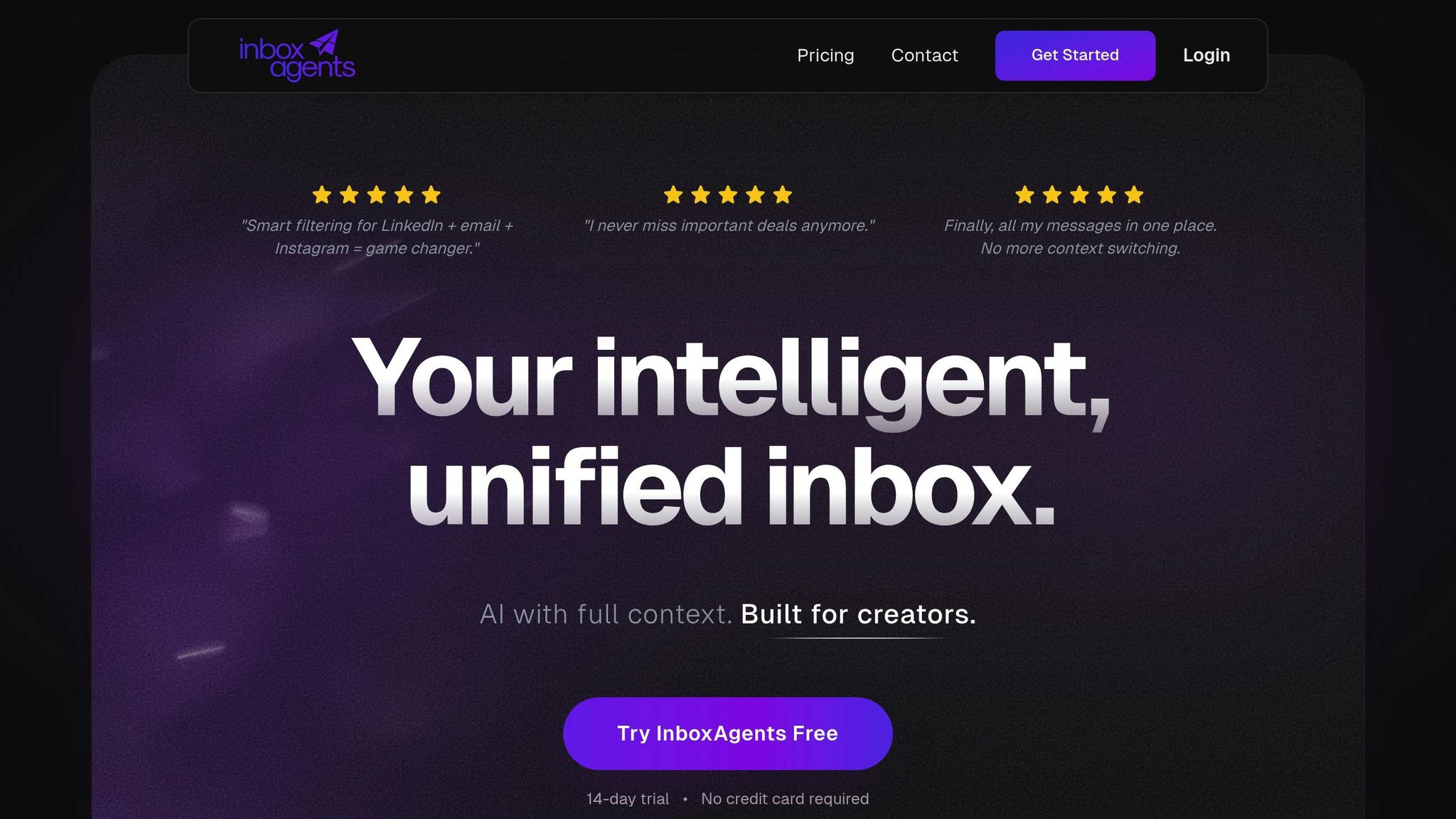
Inbox Agents takes predictive modeling and real-time sentiment analysis to the next level by streamlining high-volume messaging with AI-powered filtering and prioritization. The platform evaluates message tone, engagement frequency, and user interactions across multiple channels - email, SMS, and in-app messaging - to create segments that adapt instantly to changing behaviors. This eliminates delays between data collection and action, ensuring your segmentation strategy stays responsive.
The platform’s smart filtering uses predictive scoring to rank conversations based on their likelihood to engage, purchase, or churn. This allows businesses to focus on high-value audiences without manually sorting through thousands of messages. Automated inbox summaries provide quick overviews of segment activity, and smart replies ensure that responses are tailored to each segment's behavioral profile. By integrating business data into these AI-driven responses, Inbox Agents delivers personalized messaging without requiring constant manual input.
Because the system updates segments in real time, it can immediately adjust when a customer’s sentiment shifts - for example, from positive to frustrated. This triggers appropriate responses, whether it’s routing the issue to human support or offering proactive solutions. This approach aligns with the broader industry trend of intent-based segmentation, which prioritizes identifying customers ready to act over static categorization. Businesses using Google’s AI tools - such as Demand Gen, Search, and Performance Max - have reported a 10% to 12% increase in overall sales effectiveness, showcasing the measurable impact of AI-driven segmentation and prioritization at scale.
Automating Personalized Messaging Campaigns
Using unified, real-time data allows businesses to make automated adjustments that feel personal and relevant. Once you've created AI-driven customer segments, you can transform these insights into large-scale, personalized campaigns. Unlike traditional automation, which depends on rigid "if-then" rules and treats every customer the same, AI uses machine learning to adapt messaging dynamically based on predictive insights. It constantly monitors customer behaviors - whether it’s web activity, social media interactions, or CRM data - and updates segments instantly when a customer’s actions shift.
For instance, imagine a shopper who usually looks for budget-friendly options but suddenly starts browsing premium products. AI picks up on this behavior change and moves them into a new segment, automatically triggering tailored messages that reflect their updated preferences. This dynamic system can handle millions of customer profiles at once, delivering content that matches individual behaviors and psychological triggers instead of relying on broad demographic categories. The results speak for themselves: brands using segmentation see a 29% higher conversion rate on average, and 90% of marketers now depend on segmentation to boost sales. These real-time adjustments create campaigns that align closely with customer intent.
Creating Tailored Campaigns Using AI Insights
AI doesn’t just show what customers are doing - it uncovers why they’re doing it. By analyzing behavioral drivers like tone, urgency, or engagement patterns, you can design campaigns that connect with specific motivations. Predictive modeling also helps forecast customer actions, such as whether they’re likely to make a purchase, respond to an upsell, or cancel a subscription. This allows you to send proactive messages before these actions happen.
Take Philosophy, for example. The beauty brand used predictive segmentation to identify high-intent subscribers in 2024, resulting in a 90% jump in revenue by targeting this group with focused campaigns. Similarly, Thread improved its audience targeting with AI-powered analytics, achieving a 40% boost in conversion rates.
To make the most of AI, focus on granular segmentation, targeting groups that represent at least 2–3% of your customer base. Use descriptive names for these segments, like "Recent browsers who haven’t purchased", instead of generic labels like "Cluster 7." This approach helps your team craft messaging that feels more relevant. AI can even suggest multiple versions of personalized copy for different segments, tailoring content to age groups or other specific characteristics while staying true to your brand’s voice.
"AI is only as smart as the data that feeds it. When you start with accurate, unified customer profiles, predictive tools can dramatically improve how you target and convert." - Brian Shumsky, Sr. Director, Strategic Partnerships, Amperity
To succeed, start with high-quality data. This includes first-party behavioral signals and zero-party data collected from surveys or quizzes. Tie your segmentation strategy to measurable KPIs like conversion rates, Customer Lifetime Value (CLV), or Cost Per Acquisition (CPA). This ensures your campaigns deliver real, measurable outcomes rather than theoretical improvements.
How Inbox Agents Automates Messaging
Building on these tailored strategies, Inbox Agents uses AI-driven insights to enhance messaging throughout the customer journey. The platform’s smart reply feature analyzes message tone, urgency, and engagement history to generate responses that feel personal - without the need for manual input for every interaction. It categorizes thousands of daily messages by priority and sentiment, offering suggested replies that align with each segment’s behavioral profile.
Automated outreach takes things a step further by sending messages at the exact moment customers are most likely to act. For example, if a customer abandons their cart or engages heavily with specific content, Inbox Agents triggers personalized follow-ups in real time. The platform even adapts responses based on segment and intent. A high-value customer might receive an exclusive offer, while a price-sensitive shopper could be presented with a targeted discount. This level of personalization ensures every interaction feels meaningful and timely.
sbb-itb-fd3217b
Tracking Performance and Refining Segments
As your AI-powered campaigns roll out, keeping a close eye on performance and making real-time adjustments is essential. AI-driven segmentation thrives on a continuous feedback loop, where every interaction fine-tunes your targeting. This ensures your audience segments update dynamically within seconds, adapting to live behavior changes and maintaining seamless data flow.
Performance metrics offer valuable insights into how well your campaigns are doing. For instance, reply velocity measures how quickly customers respond, with improvements often ranging from 2–3% to 5–8%. Conversion rate lift highlights the direct boost in conversions driven by AI interactions compared to traditional methods. Another key metric, customer sentiment shift, tracks changes in customer responses - like moving from frustration to satisfaction - providing a clear view of segment quality. Additionally, AI assigns propensity scores, which predict purchase likelihood, churn risk, or engagement potential. These scores help you take proactive steps, such as reaching out before a customer disengages completely.
"AI metrics are where the guesswork of AI strategy meets scientific and operational rigor." - Ian Heinig, Agentic AI Marketer, Sendbird
AI-powered tools, such as unsupervised clustering algorithms, uncover micro-segments you’d likely miss manually. For example, they can identify a group like "late-night mobile browsers who only make purchases after viewing pricing". If a segment underperforms, AI doesn’t just flag the issue - it suggests fixes. Take declining engagement as an example: the system might automatically reduce message frequency to safeguard your sender reputation. In July 2025, a SaaS company demonstrated this in action by using real-time performance tracking to refine audience segments based on immediate feedback. Over three months, they saw a 25% increase in customer engagement and a 15% rise in conversion rates.
Platforms like Inbox Agents take this a step further by continuously adapting audience segments using unified data and real-time insights. As discussed earlier, real-time analytics are key. Inbox Agents uses these analytics to recalibrate messaging instantly when customer behavior shifts. For instance, if a customer who usually browses budget options suddenly starts exploring premium products, their profile is updated immediately. Future messaging adjusts to reflect this new interest. This dynamic approach transforms static segments into evolving audience groups, ensuring your campaigns stay relevant and effective as customer intent shifts. With every interaction, your targeting becomes sharper and more precise.
Benefits of AI Segmentation for High-Volume Messaging
When dealing with thousands - or even millions - of customer interactions, manual segmentation simply can’t keep up. AI changes the game by cutting processing time from days to mere seconds. Instead of just reacting to past customer actions, like sending a follow-up after an abandoned cart, AI predicts what customers might do next - whether that’s making a purchase or leaving altogether.
This shift from reactive to proactive strategies is a game-changer, as highlighted by industry experts:
"AI moves you from being reactive... to being proactive... allowing you to intervene effectively and directly impact Customer Lifetime Value (CLV)." - Ageless Revenue
Manual segmentation often requires extensive data exports and filtering, which can take days. In contrast, AI updates segments instantly, adapting to customer actions in real time. For example, Reserve Bar adopted AI-driven segmentation between 2024 and 2025, unlocking insights that manual methods simply couldn’t reach. Under the leadership of Kimberly O'Dell, Director of CRM & Loyalty, this approach generated an impressive $4.5 million in SMS revenue. The speed and precision offered by AI pave the way for a deeper understanding of customer behavior.
AI’s ability to analyze hundreds of variables - like device type, browsing activity, and content preferences - allows it to uncover hidden patterns and create highly specific micro-segments. Studio Movie Grill tapped into this capability by using AI-powered sign-up units to convert anonymous website visitors into identifiable leads, achieving an astounding 88× ROI under the guidance of VP of Brand & Marketing Ted Low.
Another major advantage is cost efficiency. Manual segmentation demands large teams to manage data collection, build lists, and execute campaigns, which can be both time-consuming and expensive. By automating these tasks, AI significantly reduces costs while driving better results. Cozy Earth, for instance, transitioned its abandoned cart flows to an AI platform in 2024–2025 and saw a staggering 515× all-time ROI for journey messages.
Here’s how manual segmentation compares to AI-driven segmentation:
| Factor | Manual Segmentation | AI-Driven Segmentation |
|---|---|---|
| Speed | Takes days or weeks to update | Updates in real time, within seconds |
| Accuracy | Limited to basic rules, prone to errors | Analyzes hundreds of variables to find hidden patterns |
| Scalability | Limited by team size and bandwidth | Handles millions of data points with ease |
| Cost Efficiency | Requires high labor and overhead costs | Automates tasks, saving time and boosting revenue |
| Logic | Reactive; based on past actions | Proactive; predicts future behavior |
With these benefits in mind, the next step is to explore how to implement AI segmentation effectively using Inbox Agents.
Implementing AI Segmentation with Inbox Agents
Integrating AI segmentation into your workflow is surprisingly straightforward with Inbox Agents. This platform consolidates communications from major messaging apps into one smart interface, eliminating the hassle of jumping between multiple apps. Considering the average person deals with over 121 messages daily across various platforms, and professionals often spend more than 3 hours managing this influx, Inbox Agents offers a much-needed solution.
The Smart Triage feature automatically sifts through the noise, prioritizing the messages that truly matter. Whether it's hot leads, investor updates, or partnership opportunities, the revenue-prioritization tool ensures that messages with revenue potential are flagged. Plus, your team receives Daily Briefings by 9:00 AM, neatly organizing conversations into actionable categories.
For businesses managing high-volume campaigns, the platform's advanced features are a game-changer. The Professional plan even includes LinkedIn account integration - perfect for B2B outreach. Meanwhile, Enterprise-level tools take it a step further with team management capabilities like lead assignment and project coordination, making collaboration across teams much smoother.
What makes this platform even more effective is its adaptability. In just 1–2 weeks, the AI learns your terminology, tone, and relationships, ensuring that automated responses align with your brand's voice. It handles routine correspondence and even negotiates meeting times based on your availability, requiring only final approval before sending. For added flexibility, you can customize how much control the AI has - designate certain contacts or topics as high-priority for manual review, while letting the AI handle routine inquiries.
This seamless integration allows businesses to adopt AI segmentation without disrupting their existing operations. And with a 14-day free trial offering full access to all features, you can explore its capabilities risk-free before making a commitment.
Conclusion
Handling high-volume messaging without the help of AI segmentation is a challenge most businesses can't sustain. Companies that have embraced AI-driven segmentation have seen impressive results, such as conversion rates climbing by up to 82% and campaign revenues increasing by an astounding 760%. These figures highlight a major shift in how businesses connect with their audiences.
Unlike traditional manual segmentation, which relies on rigid, predefined rules, AI works dynamically. It examines behavioral patterns in real time, creating micro-segments that adjust in seconds and even anticipate future customer actions - whether it's making a purchase or deciding to leave.
"The biggest competitive advantage in the inbox is predictive relevance." - Gila, Founder, Ageless Revenue
But here’s the catch: effective AI segmentation starts with clean, unified data. If your CRM, behavioral analytics, and messaging platforms aren’t integrated into a single, cohesive system, even the most advanced AI can fall short. A solid data foundation enables AI to fine-tune send times, choose the most effective communication channels, and deliver personalized content - all at a scale that would require a large team to manage manually.
This is where Inbox Agents steps in, bringing all these capabilities under one roof. With features like automated inbox summaries, smart replies, and even tools for handling negotiations, it revolutionizes how businesses engage with customers on a large scale.
AI segmentation doesn’t just make high-volume messaging manageable - it transforms it. By leveraging real-time, predictive insights, tools like Inbox Agents are reshaping the way businesses build meaningful connections with their audiences.
FAQs
How does AI segmentation help improve conversions and boost revenue?
AI segmentation takes conversions to the next level by diving deep into customer data to create precise audience groups. Leveraging machine learning, it spots patterns in how people behave, what they prefer, and their transaction history. This means businesses can send personalized messages at just the right moment, boosting engagement and cutting down on wasted marketing efforts. The result? Higher click-through rates and more purchases.
When messages align with a segment's specific intent, campaigns not only drive more revenue but also make ad budgets work harder. AI tools can even predict which customers are most likely to take action, helping businesses allocate resources smartly and improve their return on investment (ROI). Tools like Inbox Agents take it a step further by automating insights and delivering custom-tailored communication across various messaging platforms, leading to measurable revenue growth and better customer experiences.
What are the most important metrics to evaluate the success of AI-driven audience segmentation?
To gauge how well AI-driven segmentation is working, it’s important to keep an eye on three main areas:
- Technical performance: Look at metrics like accuracy, precision, and recall. These numbers reveal how effectively the AI is identifying and grouping your audience segments.
- Operational efficiency: Check things like response times, throughput, and the cost per interaction. These factors show whether the system is running smoothly and staying cost-effective.
- Business impact: Pay attention to results like higher conversion rates, increased revenue, and lower customer churn. These outcomes highlight how segmentation is contributing to your bottom line.
Focusing on these areas can help ensure your AI-driven segmentation efforts are not only measurable but also aligned with your business goals.
Why is consolidating data crucial for AI-powered audience segmentation?
Consolidating data plays a key role in making AI-driven audience segmentation work effectively. By bringing together scattered information from various channels - like website interactions, email campaigns, chat conversations, and social media activity - it creates a unified customer profile. This holistic view helps AI understand the complete context of customer behavior, leading to better accuracy in identifying their intent and reducing the risks of missing critical insights due to fragmented datasets.
Centralizing data also tackles inefficiencies caused by data silos, ensuring that messaging stays consistent across all platforms. With one reliable and clean data source, AI can generate precise and adaptable audience segments. This enables marketers to execute large-scale campaigns while still delivering personalized experiences for every individual customer. The result? Higher conversion rates, lower churn, and a more efficient way to manage audiences.